What Is Anxiety?
Anxiety is a normal human response to stress, danger, or uncertainty. Feeling anxious before an exam, job interview, or important event is completely natural. However, anxiety becomes a disorder when fear or worry is excessive, persistent, and irrational, and starts to interfere with daily life.
In anxiety disorders, the fear often continues even when there is no real or immediate threat.
Understanding Anxiety (In Simple Words)
Anxiety is often described as the fear of losing control or worrying about something that may happen in the future. This fear may never actually occur, but the body reacts as if danger is present.
Anxiety is different from fear:
- Fear is related to a present or immediate danger.
- Anxiety is related to a future or imagined danger.
Anxiety can cause physical reactions such as a racing heart, restlessness, muscle tension, and difficulty relaxing.
Normal Anxiety vs Anxiety Disorder
Feeling anxious is a basic survival instinct and can sometimes be helpful. It can keep us alert and prepared.
However, in anxiety disorders, worry becomes excessive and unrelated to real danger. Conditions such as Generalized Anxiety Disorder (GAD) or panic disorder involve ongoing anxiety that disrupts work, sleep, and relationships.
Symptoms of Anxiety
Anxiety symptoms can affect the mind, body, and behavior.
Mental & Emotional Symptoms
People with anxiety may experience:
- Persistent worry or fear about future events
- Constant tension or feeling “on edge”
- Racing or uncontrollable thoughts
- Difficulty concentrating or focusing
- Increased irritability over small issues
- A sense of doom or fear that something bad will happen, even without evidence
These symptoms can occur even when nothing stressful is happening.
Physical Symptoms
Anxiety often shows up physically, including:
- Racing or pounding heart
- Shortness of breath
- Trembling or shaking
- Dizziness or lightheadedness
- Muscle tightness
- Upset stomach, nausea, or diarrhea
- Fatigue
- Trouble falling or staying asleep
Behavioral Symptoms
Behavioral signs of anxiety may include:
- Avoiding social situations or certain places
- Procrastination
- Seeking constant reassurance
- Overthinking
- Nail biting or other nervous habits
Why Do People Get Anxiety?
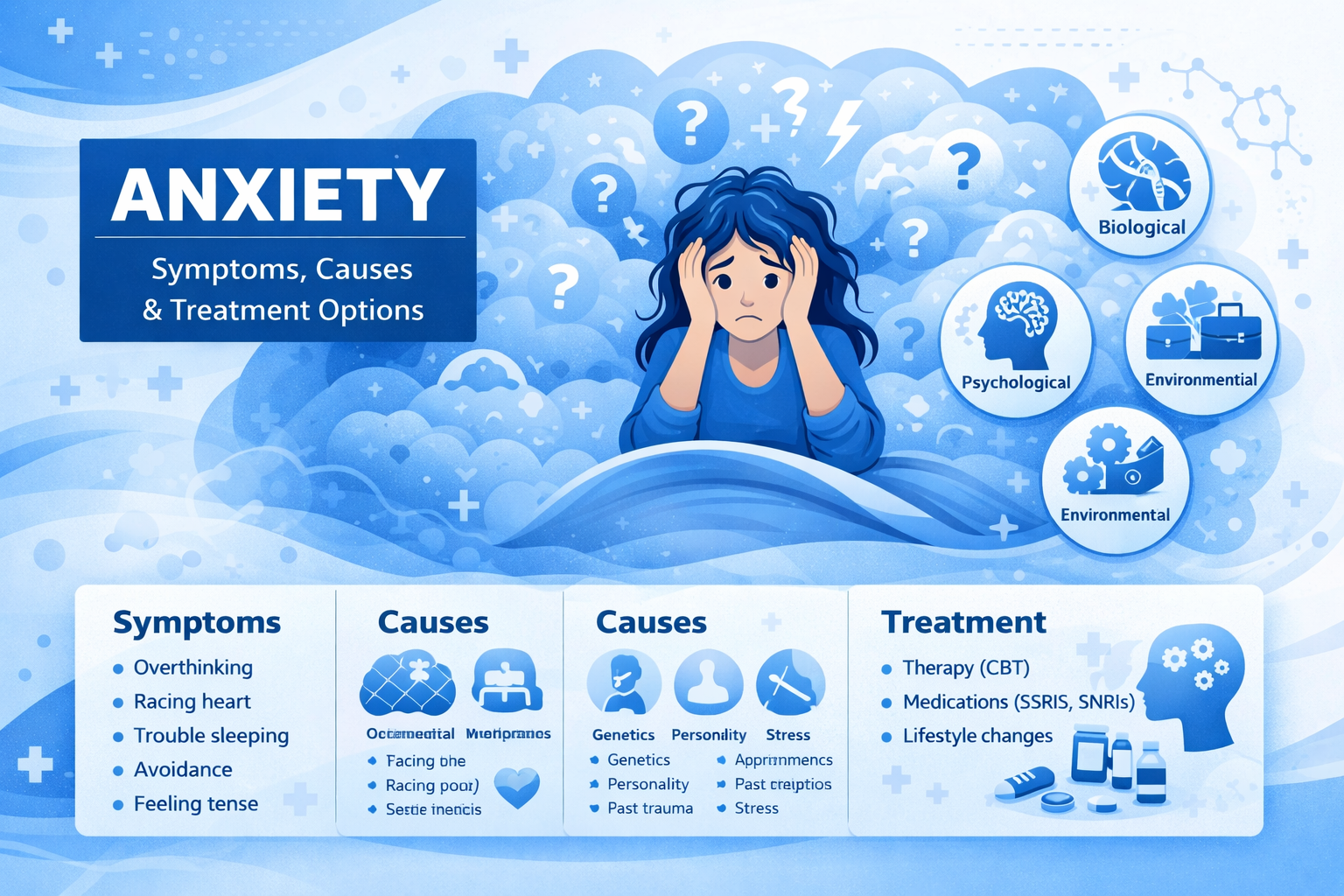
Anxiety usually develops due to a combination of biological, psychological, and environmental factors.
Biological Causes
- Genetics (anxiety often runs in families)
- Brain chemistry imbalances
- Medical conditions such as thyroid disorders or heart problems
- Withdrawal from certain substances or medications
Psychological Causes
- Personality traits
- Past or current mental health conditions such as depression
- Low self-esteem or negative thinking patterns
Environmental Triggers
- Trauma or childhood abuse
- Financial stress or job pressure
- Relationship problems
- Social isolation
- Major life events such as loss, illness, or bullying
Treatment Options for Anxiety
Anxiety is highly treatable, and many people improve with the right support.
1. Psychotherapy
Cognitive Behavioral Therapy (CBT) is considered the most effective therapy for anxiety. CBT helps people:
- Identify anxious thoughts
- Reduce avoidance behaviors
- Build healthy coping skills
2. Medications
In moderate to severe cases, doctors may prescribe medications such as:
- SSRIs (e.g., sertraline, escitalopram)
- SNRIs (e.g., duloxetine)
These medications help regulate brain chemicals related to anxiety. Medication should always be taken under medical supervision.
3. Self-Help & Lifestyle Strategies
Lifestyle changes can strongly support recovery:
- Regular physical activity
- Healthy, balanced diet
- Adequate sleep
- Support groups or trusted social support
4. Coping Skills
Helpful coping techniques include:
- Deep or slow breathing exercises
- The 5-4-3-2-1 grounding technique
- Mindfulness and grounding exercises
- Journaling thoughts and emotions
When Should You Get Help?
You should consider professional help if:
- Anxiety affects daily life
- You experience panic attacks
- Anxiety interferes with sleep, work, or relationships
- Anxiety feels constant or uncontrollable
Final Thoughts
If you are living with anxiety, you are not alone. Anxiety is not a weakness, and asking for help is a sign of strength. With the right combination of therapy, medication, and self-care, relief is possible, and better days can truly lie ahead.