What Is Insomnia?
Insomnia is a common sleep disorder where a person struggles to fall asleep, stay asleep, or wakes up too early and doesn’t feel refreshed. Almost everyone has a bad night of sleep once in a while, but insomnia is different. It becomes a repeated pattern, not just a one-night problem.
When sleep problems continue, they don’t stay limited to the night. They slowly affect your daytime life, your mood, energy, focus, and even your confidence.
A Simple Explanation of Insomnia
Insomnia means more than just “not sleeping well.” It can show up in different ways. Some people lie awake for hours before falling asleep. Others fall asleep easily but wake up again and again during the night. Some wake up too early and can’t go back to sleep.
Over time, poor sleep starts to affect the day. You may feel:
- Constantly tired or sleepy
- Unable to focus at work
- Easily irritated or anxious
- Worried all day about whether you’ll sleep at night
This worry itself can make insomnia even worse.
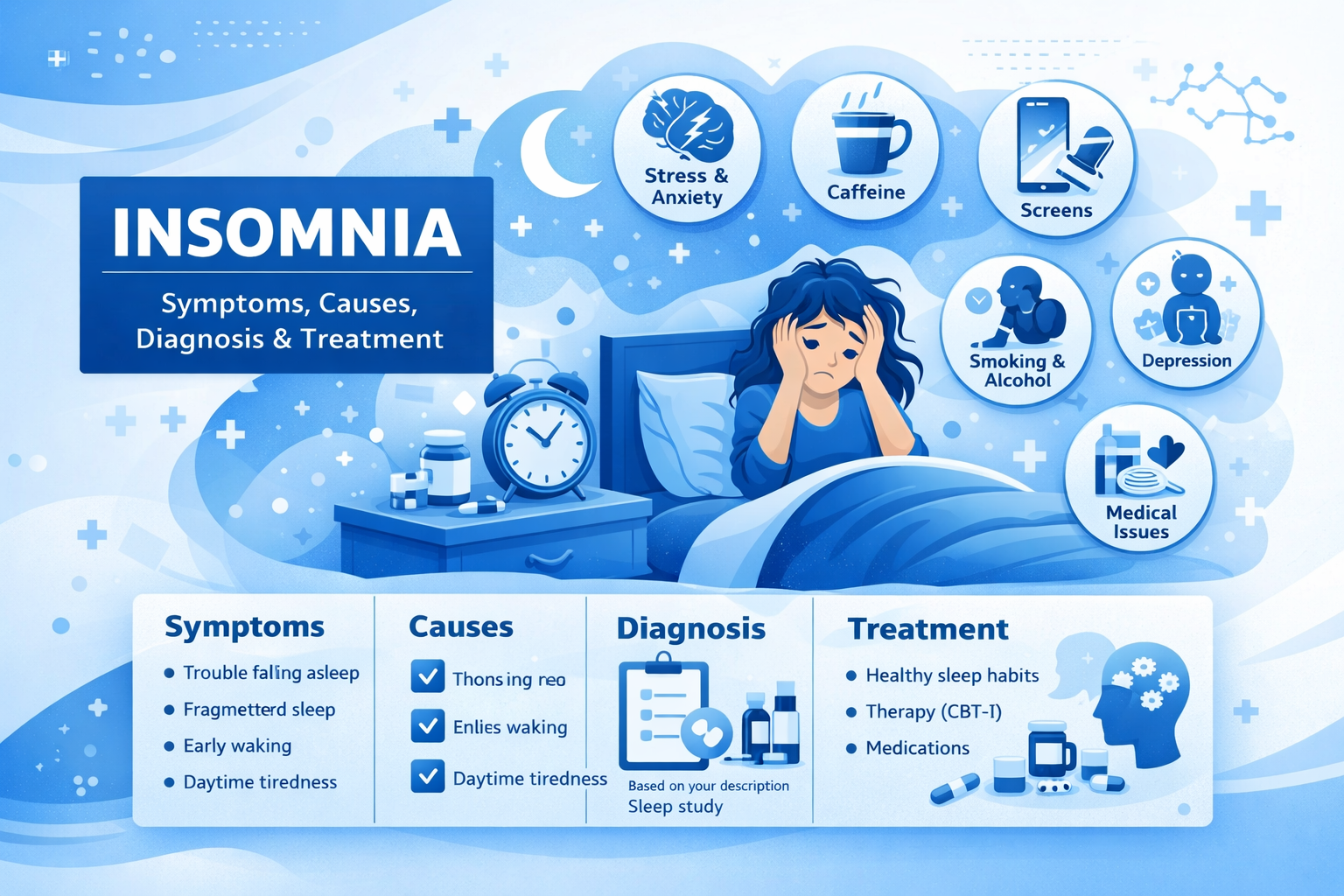
Common Symptoms of Insomnia
People with insomnia may experience:
- Trouble falling asleep at night
- Waking up frequently during sleep
- Waking up too early
- Feeling tired, groggy, or low on energy during the day
- Difficulty concentrating or remembering things
- Mood changes such as irritability, anxiety, or sadness
- Headaches or daytime sleepiness
How Doctors Diagnose Insomnia
There is no single test that confirms insomnia. Doctors usually diagnose it by listening to your story.
They may ask about:
- Your sleep routine
- How long the problem has been going on
- Your mental and physical health
- How sleep issues affect your daily life
Sometimes, a sleep study is recommended. This is usually done to rule out other problems like sleep apnea, which can disturb sleep without the person realizing it.
What Causes Insomnia?
Insomnia can happen for many reasons, and often more than one cause is involved.
Mental & Emotional Reasons
- Stress from work, family, or life events
- Anxiety or depression
- Overthinking or racing thoughts at bedtime
Lifestyle Habits
- Drinking too much caffeine (coffee, tea, energy drinks)
- Smoking or drinking alcohol
- Using phones or screens late at night
- An irregular sleep schedule
Medical Reasons
- Chronic pain
- Conditions like asthma, acid reflux, or thyroid problems
- Sleep apnea
- Hormonal changes
Medications
Some medicines can interfere with sleep, such as:
- Certain antidepressants
- Blood pressure medications
- Steroids
- Cold or allergy medicines
Treatment Options for Insomnia
The good news is that insomnia can be treated, especially when the cause is identified.
1. Healthy Sleep Habits (Very Important)
Small changes can make a big difference:
- Go to bed and wake up at the same time every day
- Avoid screens at least one hour before sleep
- Avoid caffeine after the afternoon
- Keep your bedroom dark, quiet, and cool
- Avoid napping late in the day
2. Therapy
Cognitive Behavioral Therapy for Insomnia (CBT-I) is considered the best long-term treatment.
It helps change negative sleep thoughts and improves habits that support better sleep. Therapy takes time, but it can be life-changing.
3. Medications (With Doctor Guidance)
- Sleeping pills may help for short-term relief
- Supplements like melatonin may be useful for some people
- Treating underlying issues such as anxiety, pain, or depression often improves sleep naturally
Medication should always be taken under medical supervision.
When Should You See a Doctor?
You should talk to a doctor if:
- Your sleep problem lasts more than 2–3 weeks
- Poor sleep affects work, driving, or mood
- You rely on sleeping pills often
Getting help early can prevent insomnia from becoming a long-term problem.
Final Thoughts
Insomnia is not a personal failure, laziness, or weakness. It’s a real condition that many people experience at some point in life. With the right habits, support, and medical care, better sleep is possible.