What Is ADHD?
ADHD stands for Attention Deficit Hyperactivity Disorder. It is a neurodevelopmental condition that affects how the brain manages attention, impulses, and energy levels. ADHD is lifelong, but with proper understanding, support, and treatment, it is very manageable.
ADHD does not mean someone is lazy or careless. It simply means their brain works differently.
Symptoms of ADHD
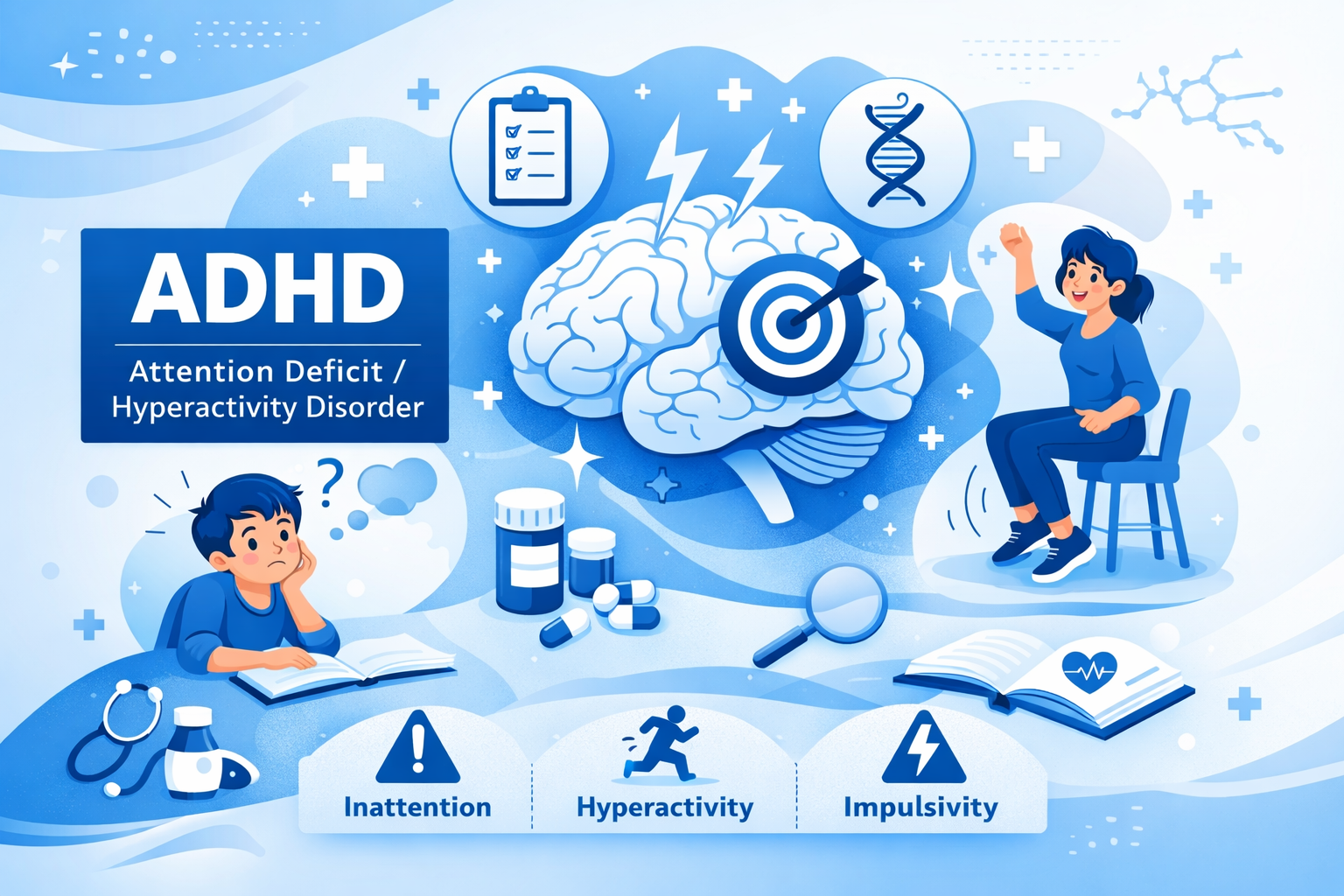
ADHD symptoms can vary depending on age, personality, and environment. However, symptoms usually fall into three main categories.
1. Inattention
People with inattentive symptoms may:
- Have difficulty focusing or staying on one task
- Get easily distracted by sounds, thoughts, or phone notifications
- Forget appointments, tasks, names, or dates
- Struggle with organization and time management
- Arrive late or miss deadlines
- Feel confused or indecisive and delay starting tasks
- Lose items such as phones, files, or keys
- Appear zoned out, daydreaming, or mentally absent during the day
2. Hyperactivity
Hyperactivity may look different in children and adults. Common signs include:
- Restlessness and constant fidgeting
- Feeling internally “driven by a motor”
- Difficulty sitting still for long periods
- Changing sitting positions repeatedly
- Talking excessively and interrupting conversations
- Constant movement or pacing
(In adults, hyperactivity is often mental rather than physical.)
3. Impulsivity
People with impulsive symptoms may:
- Interrupt others while they are speaking
- Act or speak without thinking
- Have difficulty waiting or being patient
- Experience emotional outbursts
- Make risky or impulsive decisions without considering consequences
- Act based on sudden urges or emotions
Types of ADHD
There are three main types of ADHD:
1. Inattentive Type
People with this type mainly struggle with focus, organization, and attention. It is often seen in adults and females and can be overlooked because hyperactivity may not be obvious.
2. Hyperactive-Impulsive Type
This type includes restlessness, impulsive behavior, difficulty sitting still, excessive talking, and acting without thinking.
3. Combined Type (Most Common)
This type includes both inattention and hyperactivity-impulsivity symptoms.
Causes of ADHD
Genetics (Biggest Factor)
ADHD is highly hereditary and often runs in families.
Brain Differences
Differences exist in brain areas responsible for:
- Attention
- Motivation
- Impulse control
Neurotransmitters like dopamine and norepinephrine function differently.
Developmental & Environmental Factors
- Premature birth or low birth weight
- Exposure to toxins during pregnancy
- Childhood trauma (can worsen symptoms but does not cause ADHD alone)
Common Myths About ADHD
ADHD is NOT caused by:
- Bad parenting
- Eating too much sugar
- Playing video games
- Laziness
- Lack of discipline
ADHD is a real neurodevelopmental condition.
How ADHD Is Diagnosed
There is no single test for ADHD. Diagnosis usually includes:
- Clinical interviews
- Detailed symptom history (childhood or adulthood)
- Behavior rating scales completed by parents, teachers, or adults
- Ruling out other conditions such as anxiety, depression, sleep disorders, or thyroid problems
ADHD can be diagnosed by:
- Psychiatrists
- Clinical psychologists
- Pediatricians (for children)
- Trained primary care physicians
ADHD Treatment Options
The most effective treatment usually combines multiple approaches.
1. Medication
Medication helps the brain use dopamine more effectively.
Stimulant medications include:
- Methylphenidate (Ritalin, Concerta)
- Amphetamines (Adderall, Vyvanse)
Benefits may include:
- Improved focus
- Reduced impulsivity
- Less mental noise
Possible side effects:
- Reduced appetite
- Sleep problems
- Anxiety (dose-dependent)
Non-stimulant medications:
- Atomoxetine (Strattera)
- Guanfacine
- Clonidine
These are options if stimulants are not suitable.
2. Therapy & ADHD Coaching
Helpful approaches include:
- Cognitive Behavioral Therapy (CBT)
- Executive function training
- ADHD coaching for structure and accountability
These help with organization, time management, and emotional control.
3. Lifestyle Supports (Not a Cure)
- Maintain consistent sleep routines
- Exercise regularly
- Eat protein-rich meals
- Follow structured daily routines
- Break large tasks into small steps
- Use alarms, planners, or reminders
4. Environmental Accommodations
Small changes can greatly improve focus:
- Quiet, low-distraction environments
- Noise-canceling headphones
- Flexible schedules
- Short work sessions with breaks
- Body doubling (working alongside others)
What ADHD Is NOT
- Not laziness
- Not low intelligence
- Not bad parenting
- Not something you “grow out of”
Final Thoughts
ADHD is a manageable condition. With the right combination of medical treatment, therapy, lifestyle changes, and support, people with ADHD can live successful and fulfilling lives.